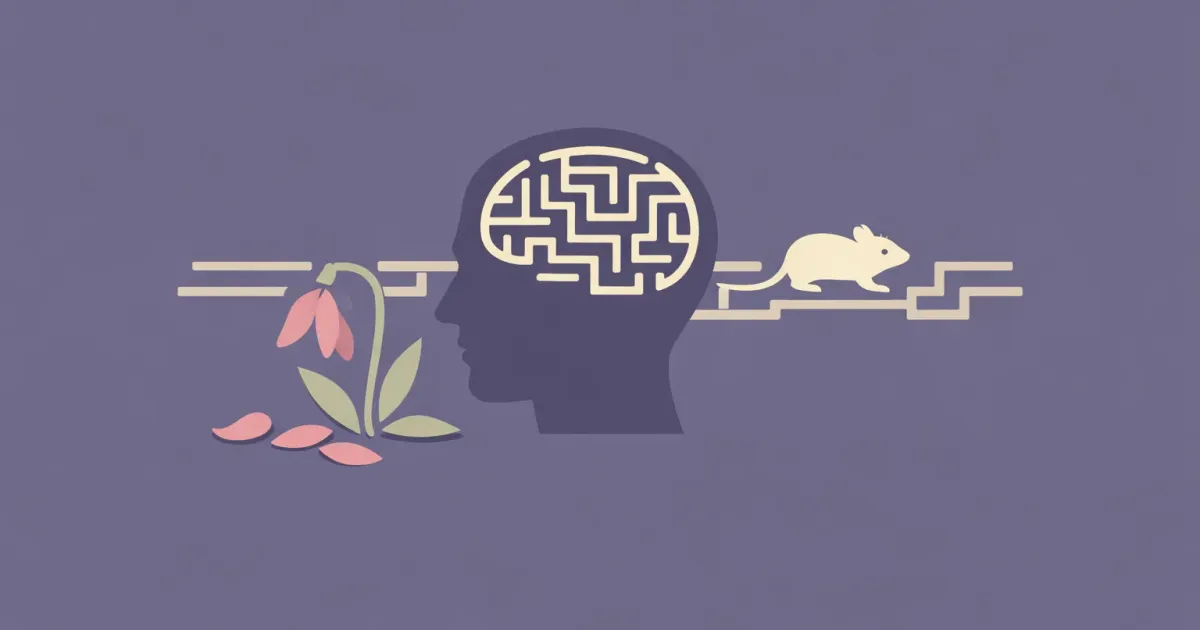
Characters
Charlie Gordon
Charlie is the whole book. He is thirty-two when the novel opens, sweeping floors at Donner's Bakery, attending Miss Kinnian's night class for adults with intellectual disabilities, and desperately wanting to "get smart" because he believes, with heartbreaking sincerity, that intelligence is what will finally make people love him. After the surgery, his IQ climbs from around 68 to around 185 in a matter of months, and the novel gives the reader the rare experience of watching a person build a self out of raw material — language, memory, desire, anger — in front of our eyes. Then, just as carefully, it takes that self apart.
The most important thing to understand about Charlie is that he is the same person at an IQ of 68, an IQ of 185, and in the final postscript when he can no longer spell his own teacher's name. The prose changes. The man does not. He is gentle, observant, and stubbornly loyal, and these traits survive every stage of the experiment.
Charlie's arc is one of the great ironies in American fiction: the gift that allows him to see himself clearly is the same gift that makes that self unlivable. At 68, he cannot perceive that his bakery "friends" are mocking him; at 185, he can perceive not only that, but also his mother's cruelty, his father's helplessness, Nemur's mediocrity, and his own erotic paralysis. Keyes is arguing, through Charlie, that cognition and happiness are not collaborators. "I've learned that intelligence alone doesn't mean a damned thing," Charlie writes near the end. "Intelligence is one of the greatest human gifts. But all too often a search for knowledge drives out the search for love." That realization, delivered at the height of his powers, is the thesis the rest of the book is organized around.
The character's split-screen quality — the "old Charlie" watching the new one from inside mirrors and behind shop windows — gives Keyes his most audacious technical device. The old Charlie is not a metaphor. He is a second consciousness the adult Charlie has buried and then unburies: "the boy peering out through the window… watching." By the final reports, the old Charlie is not watching from behind the window. He is the one holding the pen. The novel's refusal to treat the pre-surgery Charlie as a lesser version of the post-surgery Charlie is its moral core. When Charlie chooses, on his own, to enter Warren State Home, he is not being defeated. He is protecting whatever is left of himself from being studied one more time.
Charlie's relationship to language is the other thing to watch. Writing begins as a chore imposed by Dr. Strauss, becomes his preferred form of thought during the middle reports, and by the end is the only thing he has left that still belongs to him. The final line of the book — "please if you get a chanse put some flowrs on Algernons grave in the bak yard" — is grammatically crude and emotionally complete, and the book wants the reader to recognize that those two things can live in the same sentence.
Professor Harold Nemur
Nemur is the senior researcher at Beekman University, the one who pushes the experiment from mouse to man and whose name is on the grant. On the surface he is the novel's closest thing to a villain: vain, cold, married to a woman who needs him to be important, and visibly resentful that his own graduate student Burt treats Charlie like a person while Nemur treats him like a result. He is the man who describes the pre-surgery Charlie as a "feeble-minded shell" during the Chicago lecture, with Charlie himself seated beside him on the platform as the exhibit, and who goes on explaining why this is a scientifically acceptable thing to say even after Charlie starts correcting his statistics.
Nemur is interesting because he is not, in the conventional sense, evil. Keyes gives him a wife, Bertha, whose ambition he carries like a second spine, and a fear of professional irrelevance that makes him rush the paper to Chicago before the data will support it. He is a small man who has been asked to be a great one, and the experiment is his last chance. Charlie's intellectual overtaking of him is therefore not just a plot point but a personal humiliation, and Nemur responds with the kind of defensive pedantry that only men who suspect they are frauds deploy.
The key scene is the confrontation in Nemur's apartment after the convention, when Charlie finally says out loud what the book has been implying — that the team's language about him before the surgery, the "feeble-minded shell" framing he hears Nemur use from the podium in Chicago, treats him as if he had not been a person at all. What Charlie wants to shout at Nemur during that speech, and what he spends the rest of the book insisting on, is simple: "I'm a human being, a person — with parents and memories and a history — and I was before you ever wheeled me into that operating room." Nemur does not concede the charge. He retreats into the language of experimental design, and the retreat is the character. Nemur is what happens when a scientist forgets that subjects also read the paper. His function in the novel is to embody the ethics problem the book is most interested in — the way "objectivity" can become a form of permission to treat a person as raw material. He is also, usefully, the foil for Strauss. Where Strauss asks Charlie how he feels, Nemur asks him to perform on command.
Dr. Jay Strauss
Strauss is the neurosurgeon and psychiatrist half of the experimental team, and he is the adult in the room Charlie most often trusts. He performs the operation itself, and from that point forward he is also Charlie's therapist, listening through the slow excavation of Rose, Norma, and the kitchen knife that dominates Charlie's dreams. He is practical, cultivated, a little paternal, and unlike Nemur he does not confuse Charlie's intelligence with his worth.
Strauss is the novel's best argument that the experiment was not, in itself, wrong — only the way it was run. He takes Charlie's pain seriously in a way Nemur cannot, and when Charlie rages at him in the later sessions (smashing a chair, screaming about his mother), Strauss sits through it. His willingness to be the target of Charlie's fury is a quiet kind of decency the book rewards: Strauss is the one Charlie still lets into the room at the end. He is also the character who recommends that Charlie "read more" during the slow early weeks, not as a clinical intervention but as a form of friendship.
That said, Keyes does not let Strauss off the hook. He is still a co-author of the original consent, still complicit in the rush to Chicago, and still, ultimately, someone who cannot stop the regression he helped set in motion. The novel uses him to make a careful point about collaboration: kindness inside an exploitative structure is not the same as ethics, and Strauss's warmth cannot compensate for what the structure did. His presence, however, is what keeps the book from being a simple indictment of science. Some scientists, Keyes insists, do love their subjects. It is not always enough.
Alice Kinnian
Alice is Charlie's teacher at the Beekman College Center for Retarded Adults, and she is the one who recommended him for the experiment in the first place. She is warm, earnest, and perceptive — the only person in the pre-surgery world who sees Charlie as something other than a punchline or a charity case. After the surgery, as his intelligence rockets past hers, she becomes the first great love of his life, and the relationship becomes the book's central measure of what Charlie has gained and what he has lost.
Alice's arc is quieter than Charlie's, but it mirrors his in a crucial way: she has to learn to love someone who keeps becoming a stranger. In the early reports she is patient and encouraging; in the middle reports she is disoriented by a pupil who now reads faster, argues more sharply, and uses words she does not know. In one of the book's rawest scenes she admits she is afraid of him — not of his intellect but of his loneliness, of the speed with which he is receding into a place she cannot follow.
The sexual paralysis that blocks their relationship for most of the novel is one of Keyes's most unsentimental inventions. Every time Alice touches Charlie, the "old Charlie" — the boy his mother slapped for looking at his sister in the bath — rises up and makes intimacy unbearable. Alice, to her credit, keeps showing up anyway, even after Charlie takes Fay as a lover and tries to push her away in shame. The climax of their arc is the late, fleeting night she comes to him through the fire escape as his regression accelerates, and they are able, finally, to be lovers. It is the one time in the novel that sex and affection share a room for Charlie, and Keyes lets it happen precisely when it cannot last. Alice's function in the book is to be the reader's proxy: the person who loves Charlie through every version of himself and therefore forces the reader to do the same.
Burt Selden
Burt is the graduate student who administers Charlie's tests and introduces him to Algernon. He is young, overworked, a little worshipful of Nemur early on, and one of the few people at the lab who treats Charlie with straightforward collegial warmth. When Charlie's intelligence eclipses his own, Burt accepts the shift with a grace Nemur never manages.
Burt's value in the novel is structural. He is the character who demonstrates that the problem with Nemur is not "science" but Nemur. Burt runs the same tests, handles the same mouse, and co-signs the same paper, but he does it without ever reducing Charlie to data. His honesty in small moments — admitting he doesn't know the answer, laughing at his own limits — makes him Charlie's truest ally inside the lab. He is also the only person present during both the Chicago revelation and the drafting of the Algernon-Gordon paper, which means he is the witness to the experiment's full ethical shape. Keyes uses Burt sparingly, but whenever the book needs the decent version of academic science to be visible, Burt is the one who carries it.
Algernon
The white lab mouse is a full character, not a prop, and the novel is explicit about this in its title and its final postscript. Algernon is the first creature the surgery has succeeded on, the one Charlie races in mazes before the operation and befriends after. He is also, across the middle of the book, Charlie's only peer: the only other living thing whose mind has been altered in the same way, on the same schedule.
Algernon's narrative function is foreshadowing made flesh. His decline in Chicago — refusing the maze, biting, losing weight — is the first public sign that the procedure is not permanent, and from that moment on the reader is forced to read every page of Charlie's later triumphs through the lens of the mouse's deterioration. The decision to call the paper "The Algernon-Gordon Effect" is the novel's bluntest formal move: Charlie names the syndrome after himself and the mouse in the same breath, which is also an acknowledgment that he and Algernon are the same experiment.
The burial scene, in which Charlie places the mouse in a small box in the back yard and lays flowers on the grave, is where the animal stops being a symbol and becomes a mourned companion. The famous final line — "please if you get a chanse put some flowrs on Algernons grave in the bak yard" — elevates this further. The post-regression Charlie can no longer read the paper he wrote about Algernon, but he remembers to tend the grave. Keyes is arguing, quietly, that grief is a lower and older faculty than analysis, and that the capacity to remember a friend survives the loss of almost everything else.
Rose Gordon
Rose is Charlie's mother, and she is the novel's most frightening presence — not because she is powerful in the present tense, but because of what she did to Charlie's body and mind long before the book began. In the flashbacks, she is the woman who refused to accept that her son was "different," who drilled him and beat him in a fruitless effort to drag him up to the level of normal children, and who finally, when his sister Norma was born, insisted that Matt take him out of the house so the baby could have a "normal" life.
Rose is shame turned into violence. Keyes is careful not to reduce her to a monster — she is a woman who has absorbed a neighborhood's contempt for intellectual disability and converted it into a private fury aimed at her son. The book's cruelest set piece is the memory of her standing over Charlie with a leather belt, screaming that he is never to look at his sister in the bathroom; the scene is the root cause of the sexual paralysis that haunts his adult life. "Get him out of here," she warns Matt when Norma is a baby, and then: "take him away from here. Now tonight." That moment, replayed and replayed in his dreams, is the original exile around which the whole novel is built.
Her late-book scene is the one that breaks the reader. When Charlie, now a genius, returns to the Brooklyn house to confront her, he finds a senile old woman who does not recognize him and who, at one point, pulls a kitchen knife from a drawer when a memory of young Charlie "bothering" Norma comes back to her. The confrontation Charlie has been waiting thirty years for cannot happen, because the person he would have confronted is no longer home. Rose's arc, such as it is, is the slow erasure of the very cruelty that shaped her son. The novel refuses him the satisfaction of either revenge or reconciliation, and that refusal is one of its most honest gestures.
Matt Gordon
Matt, Charlie's father, is the softer parent and the one who finally takes Charlie away. He is a barber by trade, a man of modest means and modest temperament, and in the flashbacks he is mostly shown standing next to Rose, trying without much success to calm her down. He is the parent who, when Rose insists the boy must go, drives Charlie to Uncle Herman's and does not look back.
Matt is the novel's portrait of decent helplessness. He loves his son — he defends him in small moments, he takes him along on a business trip to the shoe-polish factory, he speaks up when Rose pushes too far — but he cannot or will not stand against her when it counts. The book treats this failure with more pity than contempt. When Charlie tracks him down years later, he finds Matt running a small barbershop, remarried (emotionally if not legally), and unable to recognize his own adult son. Charlie watches him work, tries to speak, and leaves without revealing who he is. The scene is Keyes at his most economical: a reunion that does not happen, between two men who might have loved each other under better parents. Matt's function is to show what Charlie's childhood cost him on both sides — a mother who tried too hard to fix him, and a father who did not try hard enough to save him.
Norma Gordon
Norma is Charlie's younger sister, the "normal" child whose birth triggered his exile from the family. In the flashbacks she is a small girl who alternately adores and fears her older brother and who, under Rose's coaching, learns to be ashamed of him. When Charlie returns to the Brooklyn house as an adult, he finds Norma middle-aged, exhausted, unmarried, and caring for their senile mother alone.
Norma is the novel's case study in how damage ripples sideways. She was told, as a child, that her brother was a danger and an embarrassment; she was raised to believe Rose's care would finally be hers once he was gone. Instead, Rose's care turned inward and then, after Matt's departure, turned into the kind of cognitive decline that would consume Norma's adult life. The sister who was promised freedom at Charlie's expense got Rose's madness as her reward.
The reunion scene between Charlie and Norma is one of the book's few redemptive encounters. She does not initially recognize him; when she does, she does not recoil. She tells him, in effect, that she has needed him, and she thanks him for coming. Keyes lets them have a few minutes of something like family before Rose stumbles in with the knife. Norma's late-book gratitude — her willingness to see Charlie as a brother again rather than as the scapegoat of her childhood — is one of the small mercies the novel allows, and it matters precisely because Rose is beyond reach. If there is any forgiveness in the book, it runs between siblings, not between parents and children.
Fay Lillman
Fay is Charlie's bohemian neighbor on Forty-third Street after he loses his job at the bakery: a blonde painter who drinks too much, dances at the Stardust Ballroom, wanders in through the fire escape half-dressed, and treats sex as a pleasant and uncomplicated appetite. She is Charlie's first lover. She is also the only woman in the book he is able to be physical with while the old Charlie still haunts the edges of his bed.
Fay works because she is not Alice. With Alice, Charlie's desire triggers the old memories of Rose and the belt; with Fay, who demands nothing and attaches nothing, the old Charlie does not show up at the window. Keyes is making a psychological point that the novel does not flinch from: Charlie can have sex when he does not care, and he cannot have sex when he does. Fay's disarray — her unwashed studio, her casual infidelities, her refusal to take anything including Charlie's genius seriously — is precisely what makes her available to him.
She is not, however, a joke or a mere convenience. Keyes gives her real affection for Charlie, real disappointment when he disappears into his research, and the dignity of finding herself a new boyfriend at the Stardust rather than waiting. Her function in the novel is twofold. She is Charlie's first true adult relationship, the one that proves the body is not broken. And she is the contrast that measures what Alice means — because the ease Charlie has with Fay, which he mistakes at first for love, is what lets him eventually recognize that what he feels for Alice is something else entirely.
The Bakery: Joe Carp, Frank Reilly, and Gimpy
The three men Charlie works with at Donner's Bakery — Joe Carp the loader, Frank Reilly, and Gimpy the head baker with the lame leg — function as a single character for much of the novel, a kind of low-grade Greek chorus of workplace cruelty. They call Charlie their friend. They also trip him, get him drunk, push girls at him as pranks, and coin the bakery's signature insult: "to pull a Charlie Gordon," used across the shop for any clumsy mistake.
Keyes uses the three men to make the novel's hardest argument about cruelty — that it is almost never pure. Joe, Frank, and Gimpy are not evil men. They are ordinary workers who have found, in Charlie, someone they can stand above without effort, and they take the free altitude the way most people would. The April Fool's episode at the party, where the dough-mixer prank backfires, is the scene where Charlie — and the reader — first sees the full shape of what they have been doing, and Gimpy's guilty aside afterward ("I thought he knew") is the book's most exact sentence about the self-deception of bullies.
The more interesting move is what happens at the end. When the regressed Charlie returns to the bakery and a new worker, Meyer Klaus, begins bullying him, Joe, Frank, and Gimpy put a stop to it and promise retribution to anyone who touches him. "Anybody bothers Charlie," Joe says, "they got to answer to us." The same men who humiliated Charlie at full strength now defend him in his decline. Keyes does not frame this as redemption. He frames it as the hard truth that cruelty and loyalty can live in the same men, and that Charlie's pre-surgery life was not as friendless as the middle chapters had made it seem. The bakery cluster is also how the book argues, quietly, that Charlie has a community — a bad one, a half-loving one, but a real one — and that the intelligence that let him see it as cruelty also stripped him of it.
Mr. Donner
Arthur Donner owns the bakery and is, in the novel's cast, the father Charlie should have had. He took Charlie on at Uncle Herman's request, promised Herman on his deathbed that the boy would always have a job, and has kept that promise with gruff, practical kindness for seventeen years.
Donner's function is moral ballast. Nemur treats Charlie as an experiment; Donner treats him as a man Herman loved. When Charlie, mid-surgery, begins to intimidate the other bakers with his intelligence and they circulate a petition to fire him, Donner resists as long as he can, and when he finally lets Charlie go, he is the one who cries, not Charlie. His return at the end is the book's quietest moment of grace. The regressed Charlie walks in and asks for his old sweeping job back, and Donner, "his eyes all wet," gives it to him on the spot. In a novel that is full of adults failing Charlie, Donner is the one whose promise held. Keyes places him at the very last chapter so the reader will remember: working-class decency, the kind that does not need a grant to operate, was quietly present the whole time.
Uncle Herman
Herman is Charlie's uncle, his mother's brother, the man who took Charlie in after Rose forced Matt to remove him from the house. He had died before the novel's present-day action begins, but he is constantly invoked. He got Charlie the bakery job. He extracted the promise from Donner that Charlie would always be employed there. He is the reason Charlie has a life at all after Rose.
Herman is a character who exists entirely by reference, and the novel is richer for it. Every mention of him — Charlie's half-formed memories of sleeping at his apartment, the stories of him protecting Charlie from Rose's rages, Donner's deathbed promise to him — points toward a version of adult manhood the book otherwise barely shows: a man who loved Charlie without trying to fix him. Keyes's decision to keep Herman off the page is canny. Herman is the book's sole uncomplicated gift, and a flesh-and-blood Herman would inevitably complicate that. As a memory, he stays whole, and his whole memory is what holds the ground under Charlie's feet when everyone else is either failing him or experimenting on him.
Fanny Birden
Fanny is the pious older woman who works the bread counter at Donner's Bakery. She is the only bakery coworker who refuses to sign the petition to have Charlie fired, and she is the first to say out loud, with biblical certainty, that whatever the operation did to Charlie, it was not right.
Fanny is the novel's Eve reference, and Keyes plays the allusion with a straight face. When Charlie tries to thank her for refusing to sign the petition, she tells him, "It's a sin," and reminds him of Adam and Eve eating from the tree of knowledge. Her framing is not treated as superstition. The book ends up agreeing with her in substance if not in theology: the pursuit of knowledge has cost Charlie his Eden, such as it was, and the expulsion is under way from the day of the surgery. Fanny's small role is load-bearing. She is the one bakery worker who sees Charlie as a full person both before and after, and her Christian vocabulary gives voice to a moral objection the secular characters cannot quite articulate.
Meyer Klaus
Klaus is the new worker at Donner's Bakery in the novel's last chapter, hired to take Charlie's old job. He does not know who Charlie is. He sees a slow man with a broom and decides, the way men like him always decide, to push him around.
Klaus is barely a character and entirely a function. His cruelty to the regressed Charlie gives Joe, Frank, and Gimpy the occasion to repent — without Klaus, the old bakery hands could not prove, to Charlie or to themselves, that whatever they used to do to him they no longer will. He is the mechanism by which the novel makes its point that cruelty in the world is continuous: when one generation of bullies ages out, another arrives, and the question is who chooses to stand in the way. Joe, Frank, and Gimpy stand in the way. That is the entire purpose of Meyer Klaus, and Keyes disposes of him in a single scene because that is all the purpose he needs.
Winslow
Winslow is the young psychologist who gives Charlie a tour of the Warren State Home when Charlie drives out to see the institution he has been pre-committed to in case the experiment fails. He is thoughtful, professional, a little tired, and unsentimental about the work.
Winslow's importance is out of all proportion to his page count. Until Charlie walks through Warren with him, the institution has been a specter — the fate Nemur holds in reserve, the void Charlie is trying to out-run. Winslow's tour turns the specter into a place with children in it: boys in the carpentry shop proudly showing off lopsided breadboards, a big boy cradling a smaller one in the yard because no one else is free to do it, a woman with a wine-colored birthmark who has given her life to these children. "It's hard work here," Winslow says, "but worth it." The sentence is the book's quiet correction to the reader's horror. Warren is not a hell, and the lives inside it are not wasted, and when Charlie chooses at the end to enter it under his own power, Winslow's tour is the reason he can do so without believing he is being buried. In a novel built on characters who exploit Charlie or fail to protect him, Winslow is a glimpse of the ethical baseline the book finally wants its reader to accept: that a life with an IQ of 68, lived among people who treat it as a life, is a life.