Essay Prompts
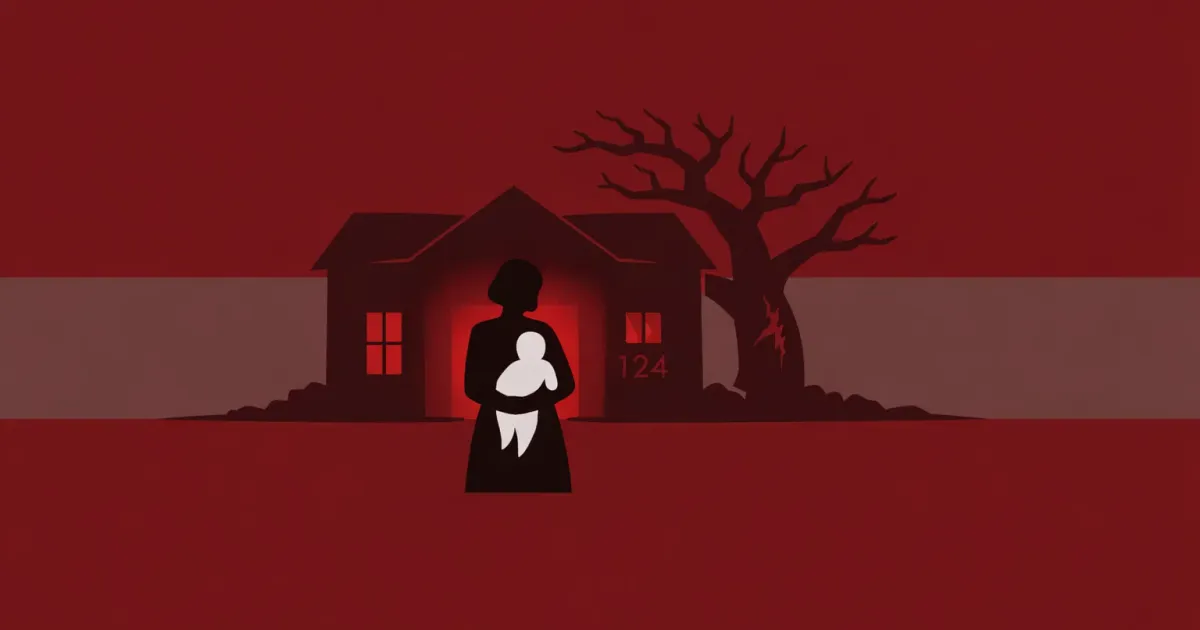
1. Sethe's Choice in the Woodshed
Question: Is Sethe's killing of her "crawling-already?" daughter defensible on the novel's own terms, or does Morrison leave her act morally indefensible even as she makes it comprehensible? (Advanced)
Don't write this essay by asking whether infanticide is wrong — the novel already knows the answer. Write it by asking what frame of moral judgment the book invites you to use, and what frame it refuses. A solid thesis picks a clear position: Morrison defends Sethe (schoolteacher's notebook, the stolen milk, the two columns of human and animal characteristics, all establish that what she was protecting her daughter from was not death but unmaking), or Morrison withholds defense (Paul D's "You got two feet, Sethe, not four" is the book's most controversial line because it may be correct), or Morrison deliberately offers no verdict. Anchor every claim in a specific scene — the woodshed as schoolteacher sees it in the woodshed section of Part One (narrated through schoolteacher's point of view), Sethe's circling kitchen explanation to Paul D in Part One with its "too thick" love and hummingbird wings, Baby Suggs's silence in the keeping room, Ella's "whatever Sethe had done, Ella didn't like the idea of past errors taking possession of the present."
A sophisticated essay argues that Morrison's refusal to resolve is the argument. The novel stages the killing twice — once from outside, through schoolteacher's calculating eye reducing Sethe to "a nigger woman holding a blood-soaked child to her chest," and once from inside, through Sethe's desperate retelling to Paul D — and the gap between those two narrations is the ethical space where the reader is asked to sit. The critical debate worth centering here is Stanley Crouch's charge that the novel is a "blackface holocaust novel" that sentimentalizes its heroine, against readings from Barbara Christian and Marianne Hirsch that understand the act as a mother's refusal to let her daughter be authored by the slaveholder's pen. The strongest thesis holds that Morrison is dismantling the whole infrastructure of moral judgment the question depends on. Paul D's "two feet, not four" tries to import a Kantian universal into a world that has already been declared outside the universal by schoolteacher's notebook. Sethe's "my best thing" counter-ethic is particularist, maternal, and built on the premise that once a human being has been priced in dollars, protection becomes its own category of violence. Read the thirty women's exorcism in Denver's walk out of the yard / Lady Jones / the community turning back to 124 in Part Three as the novel's most considered response — not forgiveness, not condemnation, but the communal act of refusing to let Sethe's past eat her present. That is not a verdict. It is a third thing, and naming it is the essay.
2. Who Is Beloved?
Question: Is Beloved the ghost of Sethe's murdered daughter, a revenant of the Middle Passage, or something the novel deliberately refuses to fix? (Advanced)
Start with the evidence for each reading. Daughter: the scar under her chin ("the little curved shadow of a smile"), Beloved's questions about Sethe's crystal earrings — gifts from Mrs. Garner that Beloved could not know about except as the daughter — the diamonds lullaby only Sethe would know, the single word carved on the pink tombstone. Middle Passage revenant: Beloved's Middle Passage monologue in Part Two with its iron circle, men without skin, dead man on her face, and the woman with earrings who jumps into the sea — none of which belong to any Ohio childhood. Something else: her perfect unblemished skin, her appearance in new shoes on a tree stump, her refusal to decay into ordinary embodiment. A solid thesis commits: either the novel gives you enough to decide (pick one, marshal your evidence, acknowledge what you can't explain), or the novel's refusal to decide is itself the position the essay defends.
The seminar-level version reads the ambiguity as structural, not decorative. Morrison's dedication — "Sixty Million and more" — already tells you the novel is scaled larger than a family tragedy. Beloved's monologue is the widest lens the book ever opens, and what she sees is not a woodshed but a hold. Build a thesis around the claim that Beloved is a single body carrying two separate hauntings Morrison has fused on purpose: the individual daughter Sethe killed in 1855, and the collective daughter slavery killed sixty million times over. The fusion is not confusion; it is the novel's argument that personal and historical grief are not finally separable in a community whose personal grief was caused by historical atrocity. Evidence worth pressing: the braided interior monologue sequence in Part Two, where Sethe, Denver, and Beloved's voices collapse into "You are my sister / You are my daughter / You are my face; you are me" — an ontological claim that mother, daughter, and ship-ghost are not separable categories in this house. Push further and ask what it means that Beloved does not die at the end but disperses — into the stream, into the footprints that "fit" anyone who steps in them, into the communal silence that forgets her "like a bad dream." A ghost that specific can be exorcised. A ghost that diffuse is ongoing.
3. Garner vs. Schoolteacher
Question: Is there a meaningful moral distinction between Garner's "benevolent" slavery at Sweet Home and schoolteacher's cruelty, or does the novel argue that the distinction is an illusion slavery requires? (Intermediate)
Set up the comparison carefully. Garner calls his enslaved men "men" in front of other slaveholders; he lets them carry guns hunting, lets Halle buy Baby Suggs's freedom, lets Sethe choose her husband. Schoolteacher measures skulls, catalogs "animal characteristics," and orders the nephews who steal Sethe's milk. A straightforward thesis argues one of three things: (1) the distinction is real but shallow — Garner is a better master, but still a master, and the institution that requires a master is the problem; (2) the distinction is an illusion Garner's own ego depends on, and the novel exposes it the moment he dies; (3) the distinction is morally meaningful but politically useless — kindness inside slavery cannot undo what slavery is. Ground the argument in specifics: Baby Suggs's observation after Garner's death that "a man ain't nothing but a man," Paul D's terrible discovery on the chain gang that Mister the rooster was freer than he was, the speed with which Sweet Home collapses into horror the minute schoolteacher arrives.
A sharper essay argues that Garner is not an alternative to schoolteacher but his precondition. The novel stages the transition between them as a revelation: everything Garner gave his men — a sense of manhood, conditional dignity, partial trust — was on loan and could be recalled instantly by a successor, which means it was never theirs. Close-read Paul D's realization in Part Two that "what would he have been anyway — before Sweet Home — without Garner? In Sixo's country, or his mother's? Or, God help him, on the boat?" The whole concept of Paul D's manhood was something Garner issued and schoolteacher rescinded, which means it was never manhood in any sense Paul D can own. Press against Saidiya Hartman's counterargument in Scenes of Subjection that "benevolent" slavery is in some ways more epistemologically violent than overt cruelty because it conceals its structure beneath affect — and set that against Eugene Genovese's framing of master-slave relations as a coerced intimacy that both parties were compelled to perform. A strong thesis might claim that Morrison uses Garner to dismantle the fantasy — dear to white American self-understanding — that good individual slaveholders could have made slavery livable. The novel's answer is that the institution does not run on the individual's kindness; it runs on the individual's power to withdraw that kindness, which is the same thing as cruelty delayed.
4. The Body as Archive
Question: Beloved records trauma on the body — Sethe's chokecherry-tree scars, Paul D's iron collar ring, Baby Suggs's crushed hip, Beloved's smooth unblemished skin. What theory of memory is Morrison advancing through this, and what can the body know that language cannot? (Intermediate)
Begin with inventory. Sethe's scars form "a chokecherry tree" — a pattern Amy Denver reads like a text before Sethe can see it herself. Paul D's tobacco tin is an image of a chest closed around a heart. Baby Suggs's hip goes out because of work, not a single named event. Beloved's skin is too new. A solid thesis argues that the body in Beloved remembers what language refuses — that trauma has been written onto flesh because the words for it have been forbidden, sold, or sung over with spirituals. Evidence: the "tree" Amy Denver names before Paul D kisses it in the tobacco-tin passage in Part One, the bit in Paul D's mouth that Halle could not speak of, Sethe's stolen milk as the theft she keeps trying to narrate and always has to start over.
A deeper essay argues that Morrison's body-archive is a direct literary response to a historical problem: the archive of American slavery is almost entirely a white archive, written by slaveholders, auctioneers, and census-takers. Schoolteacher's notebook is Morrison's compact emblem of this archive — human and animal characteristics in two columns, ink on paper, the document produced about Sethe rather than by her. Against it, Morrison sets the body as a counter-archive, legible but not authored in writing, requiring witnesses rather than readers. Develop the thesis around three moves: the scars as text (Amy Denver's "chokecherry tree," Baby Suggs kissing them in the Clearing, Paul D reading them with his mouth), the body as container of what can't be said (Paul D's tobacco tin, Halle's butter-smeared face after watching the milk theft), and the body as relational testimony (Baby Suggs's sermon in the Clearing in Part One: "Here, in this here place, we flesh … flesh that needs to be loved"). Engage with trauma theory — Cathy Caruth's argument that trauma returns as what the mind cannot process, against Morrison's specifically embodied version where the return is not only psychic but physical. A strong thesis might claim that Morrison is arguing that American literature cannot tell the truth about slavery in language built by the slaveholders, and that the body is the only archive slaves never lost the key to — which is also why schoolteacher's most violent act is not the whip but the notebook.
5. "You got two feet, Sethe, not four"
Question: Paul D tells Sethe her love is too thick, that she has two feet, not four. Is he right, wrong, or necessary in a way that cannot be reduced to either? (Advanced)
Don't settle this quickly. Paul D has survived Sweet Home, the chain gang in Alfred, and the iron bit — he knows what the body will do to stay alive and what the heart will do to bury itself. His judgment of Sethe is not a bystander's judgment. A straightforward thesis picks a stance: Morrison endorses him (killing a child cannot be licensed by love, and Paul D is the one character who says so), Morrison critiques him (the phrase "four feet" equates Sethe with the animal column schoolteacher put her in, which reproduces the violence he means to condemn), or Morrison needs him to be wrong in a way that is also right. Anchor every move in specific language: Sethe's "my love was too thick," the hummingbird image beating at her head, Paul D's walking back out the door after Sethe's circling kitchen explanation in Part One, his eventual return in the coda at the end of Part Three with "me and you, we got more yesterday than anybody. We need some kind of tomorrow."
The seminar version takes seriously that Paul D's line commits exactly the rhetorical violence he is accusing Sethe of enacting. Schoolteacher told Sethe she was four-footed; Paul D, trying to call her back to her humanity, invokes the same figure. Morrison wants you to hear the echo. Build a thesis around the claim that Paul D's judgment is indispensable and disqualified in the same breath — indispensable because someone inside Sethe's own community has to name that her love became its own form of tyranny (the house ate her, Beloved ate her, the thickness was killing her), disqualified because the vocabulary available to him is the slaveholder's. The strongest essays will press the gendered dimension: Paul D's ethic is the ethic of the man who escaped alone, whose survival was a matter of containing his heart in a tobacco tin. Sethe's ethic is the ethic of the woman who escaped pregnant, whose survival was indistinguishable from her children's. The novel does not adjudicate these ethics; it watches them collide. A strong thesis might claim that Morrison ends the novel with Paul D returning to Sethe precisely to argue that neither ethic can live alone — Paul D's "you your best thing, Sethe" is the book's attempt to synthesize a maternal and a non-maternal theory of survival without letting either swallow the other. Sethe's "Me? Me?" is a question, not an answer, and Morrison gives it the last word on purpose.
6. The Community and the Exorcism
Question: The same Black community that fed ninety people at Baby Suggs's feast withdraws from 124 when the slave catchers arrive, and stays withdrawn for eighteen years. Why do the thirty women finally come back, and what does their return mean for the novel's argument about collective responsibility? (Intermediate)
Set up the arc. In the Clearing sermon in Part One, Baby Suggs's impromptu feast crosses some invisible line — "too much, they thought. Where does she get it all, Baby Suggs, holy?" — and the next morning nobody warns her that four horsemen have ridden past their houses. The community's offense at abundance curdles into a silence that lets schoolteacher arrive unopposed. For eighteen years 124 stands alone. Then in Denver's walk out of the yard / Lady Jones / the community turning back to 124 in Part Three, Ella hears that a devil-child is eating Sethe alive, and something clicks: "whatever Sethe had done, Ella didn't like the idea of past errors taking possession of the present." Thirty women walk up Bluestone Road. A strong thesis picks a reading: the novel indicts the community's silence and shows their return as atonement; or the novel treats the withdrawal as understandable (Baby Suggs's feast genuinely was proud) and the return as an act of reluctant grace; or the novel stages both as necessary parts of a single moral economy, where community must sometimes withdraw to survive and must sometimes return to redeem its withdrawal.
A deeper essay argues that the community's arc is the novel's clearest statement of an ethics that is neither individual nor institutional but collective and fragile. Baby Suggs preaches in the Clearing sermon in Part One that "we flesh" — that Black self-love is the precondition of Black survival — and then the community she has preached into being cannot carry the weight of her abundance. Build a thesis around the claim that Morrison is diagnosing a specific historical wound: the communal self-hatred that slavery produces, in which another Black person's survival looks like a reproach. Strong evidence: the "you," "me," "she" cadence of the women's voices at the feast ("loaves and fishes were His powers — they did not belong to an ex-slave who had probably never carried one hundred pounds to the scale"), the specific language of envy that precedes the silence. Then press on what Ella finally activates: not forgiveness of Sethe, but a refusal to concede that the past gets to eat the present. A sophisticated thesis might argue that Morrison distinguishes reconciliation (which the novel never grants) from rescue (which the women do enact), and that her theory of community is minimal and real — you do not have to approve of your neighbor's history to refuse to let her be eaten by it. Read the song the women find on the porch — "the sound that broke the back of words" — as the formal inverse of schoolteacher's notebook: ink on one side of the novel, unwritten song on the other, and the song is what finally dismantles the ghost.
7. "This Is Not a Story to Pass On"
Question: The novel's coda repeats "This is not a story to pass on" three times. The phrase in English means two contradictory things at once. Which meaning does Morrison endorse, and what is she asking the reader to do with that doubleness? (Advanced)
Start with the line's grammar. "Pass on" can mean transmit (to pass on a story is to tell it to the next person) or skip (to pass on a story is to decline it, as one passes on a meal). Morrison knows this. A straightforward thesis argues that the coda is asking both things at once: do not transmit this (the horror is too much for ordinary retelling, the community agrees to forget Beloved like a bad dream) and do not skip over this (do not let the memory pass without reckoning). A solid essay picks a reading and defends it, but the stronger version commits to the doubleness. Anchor the analysis in specific coda moves: the forgetting that "was not like forgetting" something trivial, the footprints by the stream that fit anyone who steps in them, the wind that is not breath, the name itself — "Beloved" — as the novel's final word.
The seminar-level argument reads the coda as a meta-textual statement about the novel's own existence. The book you are finishing is itself the act of disobeying the first reading of the refrain and obeying the second. Morrison has written this story in order to insist that it must not be passed on (skipped) by American literature, while simultaneously insisting that it cannot be comfortably passed on (transmitted) in the genre of familial anecdote or historical fiction. Build a thesis around the claim that Morrison's ethics of memory are triangular: the community must forget Beloved to survive the present, the reader must remember her to survive the past, and the novel itself occupies the impossible position of archiving what the community has agreed to release. Engage with the dedication ("Sixty Million and more") as the counter-inscription of the coda — Morrison is naming a collective loss in the frontmatter precisely so the specific individual haunting can be released in the backmatter without being buried again. Strong evidence: the way the final coda sentence is a one-word paragraph — "Beloved." — which is also the only word Sethe could afford on her daughter's headstone. The novel ends with the same word the stonecutter charged her ten minutes of sex to carve, which means the book has become the rest of the inscription Sethe could not pay for. A sophisticated thesis might argue that Morrison's whole novel is a cemetery she has built for the reader so that the community of 124 does not have to carry the stones.
8. Gender and the Different Damage
Question: The novel distinguishes the damage slavery does to men (Paul D, Sixo, Halle) from the damage it does to women (Sethe, Baby Suggs, Ella, Nan). Are those damages different in kind, or is the gender distinction itself one of the fictions the novel is dismantling? (Advanced)
Map the evidence. The men: Paul D with his iron collar ring, his tobacco tin, his moment realizing Mister the rooster was freer than he was; Sixo refusing English and going to his death singing "Seven-O"; Halle disappearing entirely, last seen sitting at the butter churn with butter smeared on his face after watching the nephews steal Sethe's milk. The women: Sethe with her stolen milk, her chokecherry-tree scars, her dead daughter; Baby Suggs losing eight children to sale and never seeing seven of them again; Ella, raped as a girl by "the lowest yet," a father and son she calls "whites"; Nan, who tells Sethe in a half-remembered language that her mother threw away every child fathered by the white crew and kept only Sethe, whose father was a Black man her mother chose. A solid thesis argues that slavery damages men by breaking their relation to autonomy and women by breaking their relation to mothering — that the Sweet Home men are unmanned by the fungibility of their labor while the Sweet Home women are unmothered by the fungibility of their children. Anchor each claim in a specific scene.
The deeper essay presses on whether the distinction holds. Sixo is unmanned but leaves a child; Halle disappears into unmaking; Paul D cannot open his tin until a woman pries it; Beloved's hunger is for Sethe, not for any of the men. Meanwhile Baby Suggs's preaching centers the body generally — "yonder they do not love your flesh" — without gendering its address. Build a thesis around the claim that Morrison uses the gender distinction to set up a harder argument: that the specific violence of slavery is not that it damages men and women in different ways but that it damages the very possibility of intimate life across gender, which is the damage 124 is trying and failing to repair. Strong evidence: the instability of the Paul D–Sethe couple across the novel, the way Beloved's arrival genders the house female in a way that expels Paul D, the tenderness of the final scene when Paul D returns to bathe Sethe's body — "she is a friend of my mind" — which gender-reverses the earlier scene of him kissing her scars. A sophisticated thesis might claim that Morrison treats the male and female damages as functionally different so she can stage their reunion as the actual ethical question the novel is asking: can two people destroyed in these particular ways still make a life together? Paul D's "we need some kind of tomorrow" is the argument, and Sethe's "Me? Me?" is the question the argument cannot answer alone.
9. Comparative: Beloved and Their Eyes Were Watching God
Question: Compare Sethe in Beloved and Janie Crawford in Their Eyes Were Watching God. Both are Black women whose self-possession is at stake across a novel framed by a female listener. Why does one reach the horizon and the other have to be pulled back from the dead? (Advanced)
This is a genuine comparison, not a parallel list. Both novels use a listening woman — Pheoby for Janie, Denver (and finally Paul D) for Sethe — to structure a Black woman's self-telling. Both novels track a heroine through men who define her and past her. Both end with a single woman and an image of gathered interiority (Janie's horizon pulled in like a fish-net, Sethe's "me? me?"). A solid thesis names the structural rhyme and argues why the two resolutions differ so dramatically: Janie narrates forward (she tells her own story in a single evening), Sethe is narrated against her will (the story comes at her in fragments and tries to eat her alive); Janie has a community that has never murdered anyone, Sethe has a community haunted by her act; Janie's generational grief is her grandmother's, Sethe's generational grief walks through her front door. Frame the comparison around what kind of past each novel thinks a Black woman can integrate, and what kind requires exorcism.
A seminar-level version reads the two novels as bookends of a Black feminist argument about history and interiority. Hurston, writing in 1937, creates a heroine whose past is recoverable through speech — Janie can tell her story to Pheoby, and that telling is itself the work of freedom. Morrison, writing fifty years later with the weight of slavery's full archive behind her, creates a heroine whose past will not submit to speech because the violence done to it was designed precisely to make speech impossible (schoolteacher's notebook, the "jungle whitefolks planted" in the Black body, the bit in Paul D's mouth). Build a thesis around this disparity. Janie can reach the horizon because Hurston's post-slavery world, brutal as it is, has not made language itself the slaveholder's tool; Sethe cannot reach any horizon until a community of thirty women provides a sound "older than words" because language is precisely what slavery broke. Strong evidence: Janie's final interior monologue is her own; Sethe's interior is invaded by Beloved's monologue of the slave ship, which is not Sethe's memory and could not be narrated in any single first person. The critical conversation most useful here pits Henry Louis Gates Jr.'s reading of Hurston's "speakerly" text against critics like Karla Holloway who have traced Morrison's deliberate refusal of that speakerly form. A sophisticated thesis might argue that Morrison is writing in conscious dialogue with Hurston's achievement, inheriting the project of Black women's self-telling and asking what must be added when the story is not one woman's life but four centuries of collective wound: exorcism, community, and the agreement to forget that is also an agreement to remember differently.
10. Naming and Unnaming
Question: Almost every character in Beloved carries a name that has been imposed, withheld, or rewritten — Sweet Home, schoolteacher, Stamp Paid, 124, Beloved itself. What is Morrison doing with names, and what kind of freedom (or its lack) do names register in this novel? (Intermediate)
What is a name in a world where names can be imposed, sold, refused, or carved into pink granite for ten minutes of sex? Every name in this novel carries a theory of power inside it. Sweet Home is a plantation named as if it were a home. Schoolteacher is not named at all — the pedagogy is the name, a role that has eaten the man. Paul D and Paul A are numbered like livestock. Stamp Paid has renamed himself to declare that his debts are canceled (he handed his wife to the master's son and decided nothing is owed after that). Baby Suggs took her slave-name and made it holy. 124 is a house number with a missing 3, standing for the missing third child. Beloved is a word from a funeral, the one the stonecutter would carve for ten minutes of sex. A solid thesis argues that names in the novel track the distinction between being named by the slaveholder (Sweet Home, the Pauls) and renaming oneself as an act of survival (Stamp Paid, Baby Suggs, and implicitly Sethe when she will not let schoolteacher's notebook name her daughter).
A richer essay argues that naming in Beloved is a microcosm of the novel's larger argument about authorship. Every master act of naming is an act of authorship — Garner naming his plantation Sweet Home is writing a fiction that the men enslaved there are asked to inhabit; schoolteacher's two columns of characteristics are acts of naming that reduce a person to a taxonomy. Against this, the freed characters' self-renaming is always partial and always costly. Stamp Paid's new name is a legal fiction he has imposed on his own grief; Baby Suggs has kept "Baby" because her dead husband called her that, which means her holiness is still routed through a man she lost; Sethe's name came from her mother, who told her "the man I gave it to" — which means Sethe's name is the only name the book offers us that was chosen by a Black woman for her daughter as an act of love. Engage with Morrison's own essays — especially "The Site of Memory" and "Rootedness: The Ancestor as Foundation" — where she writes about the naming problem as central to African American literary tradition. A strong thesis might claim that the novel's refusal to name Beloved more specifically than "Beloved" is Morrison's deliberate act of literary humility: the only name available for the murdered daughter and the Middle Passage revenant is the word for a funeral, because American English has no word yet for what was done to her, and the novel itself is part of the project of trying to make one.